


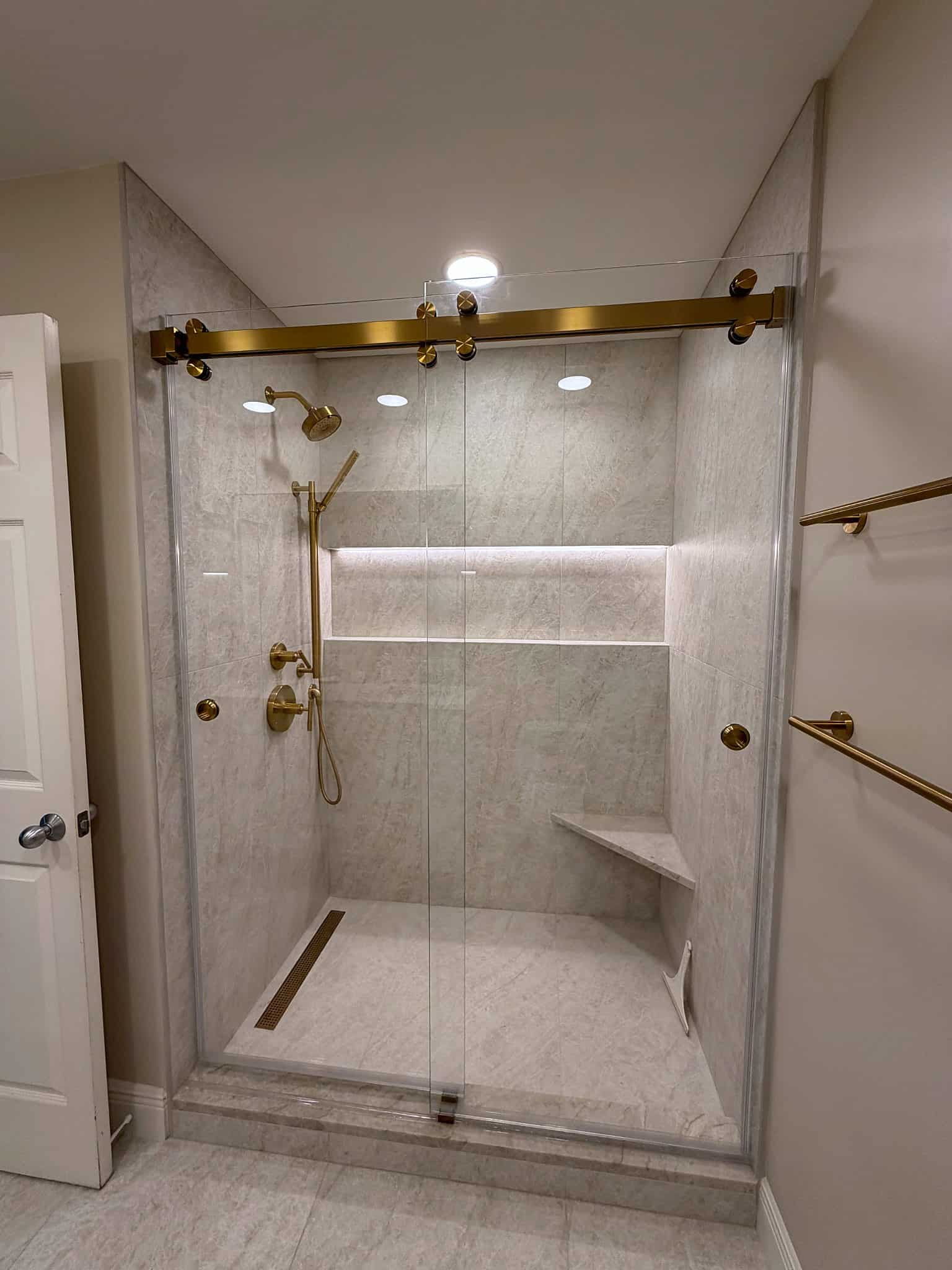
What comes out
The old frame, the track and the caulk all come off. What's left are the screw holes and the outline where the frame sat.
Holes are filled, and the new hardware is placed to cover or avoid them where it can. If the tile under the old track is cracked or loose, fix that first. Glass should sit on a solid surface.
Tub or walk-in shower
A tub can take a frameless slider, a hinged door, or a single fixed panel that keeps the splash in. You lose the track and keep the tub.
If you're converting the tub to a walk-in shower, the remodel happens first. The glass is measured once the new curb and tile are done.
Walls that aren't square
Older bathrooms rarely have perfectly plumb walls. A framed door hides that behind metal. Frameless glass doesn't.
That's why the opening is measured in person, corner by corner. Each panel is cut to the real walls, so the gaps look even.
Why people make the switch
Here's what homeowners usually say they're done with.
- A bottom track that collects water, soap and mildew
- Rollers that stick or jump the track
- Corroded or pitted frame corners
- A bathroom that looks dated the moment you walk in