


What the rule actually says
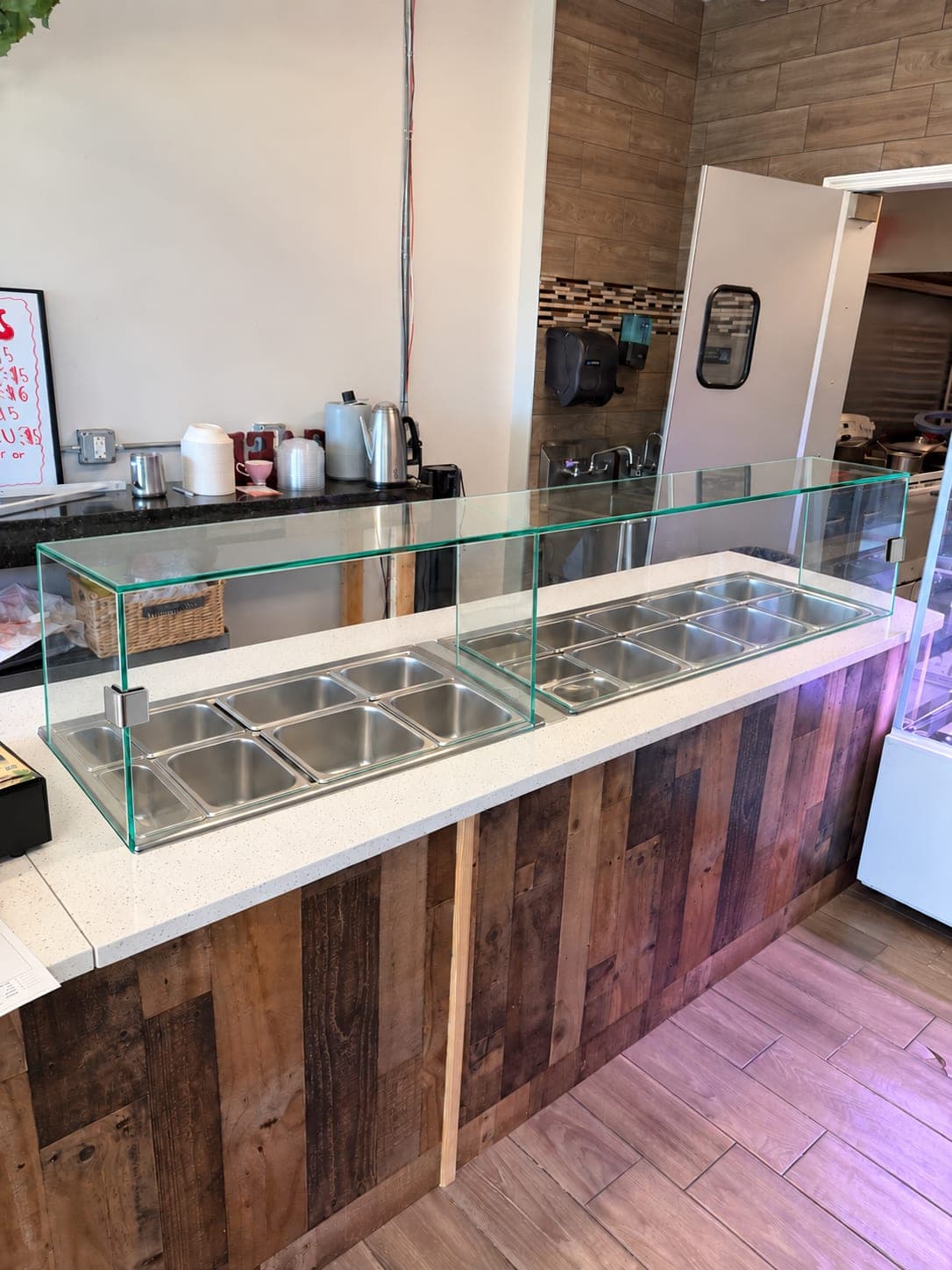
The FDA Food Code requires food on display to be protected from contamination by consumers. It lists packaging, counter and service-line food guards, salad bar guards and display cases as acceptable methods, along with other effective means.
There are narrow exceptions, like whole nuts in the shell and raw produce customers will wash or peel themselves. Everything else that sits open in front of customers needs protection.
Where you need a guard
Think about where customers stand and where open food sits.
- Buffets, hot bars and steam tables
- Salad, poke and build-your-own bowl lines
- Pastry and bakery counters with open trays
- Self-serve stations in cafeterias, hotels and clubs
- Deli and prepared-food counters where customers order face to face
Height and coverage: what matters
Florida doesn't publish one universal sneeze guard height. What inspectors look for is coverage: the glass has to sit between customers and the food on every side they can reach, including the ends of a line.
Self-serve lines need the guard close enough to the food that customers reach under it. Full-service counters need it tall enough to block a standing customer. Your plans and your inspector set the final line, so share them with your glass company before anything is cut.
Planning a guard for a new build-out
Bring the glass company in once the counter layout is final. Plans let them quote early, and they should measure on site after the countertop is installed, because glass has to fit the real counter, not the drawing.
Give them your inspection date up front. A custom guard is the last thing standing between a finished counter and an open door.
Glass, acrylic or a stock unit?
Acrylic covers cost less but scratch, cloud and yellow with daily cleaning. Stock framed units come in set lengths with metal posts.
Custom tempered glass fits the exact counter, stays clear for years and cleans in one wipe. For a designed space, it's the option that looks like part of the build.