










Why South Florida glass spots so fast
Our groundwater runs through limestone, which is why so much of the region's tap water is hard. When droplets dry on glass, the water leaves and the minerals stay.
One spot is easy to wipe. Weeks of spots bond into a cloudy film that ordinary cleaners struggle with, and over time it can etch the surface.
The 30-second habit that prevents it
Keep a squeegee in the shower and use it before you step out.
- Squeegee top to bottom, overlapping each pass.
- Wipe the bottom edge and the door sweep with a microfiber cloth.
- Leave the door open a few inches so the shower dries.
Weekly cleaning that won't harm the glass
Use a non-abrasive glass or shower cleaner, or a mix of white vinegar and water for light mineral spots. Rinse well and dry with a microfiber cloth.
Skip scouring pads, steel wool, razor blades and powdered cleansers. They scratch the surface and make future buildup cling harder. Check hardware finishes too: strong acids can dull some metal finishes, so keep vinegar off hinges and handles.
When a protective coating is worth it
A glass coating fills the microscopic texture of the surface so water beads and runs off instead of drying in place. In hard water, that means fewer spots and much easier weekly cleaning.
Coatings work best on new glass, before buildup starts, so ask your installer about one when you order a new enclosure.
When cleaning isn't enough
If glass stays cloudy after a proper cleaning, the minerals may have etched the surface. At that point cleaning won't bring it back, and replacing the panel or the enclosure is the real fix.
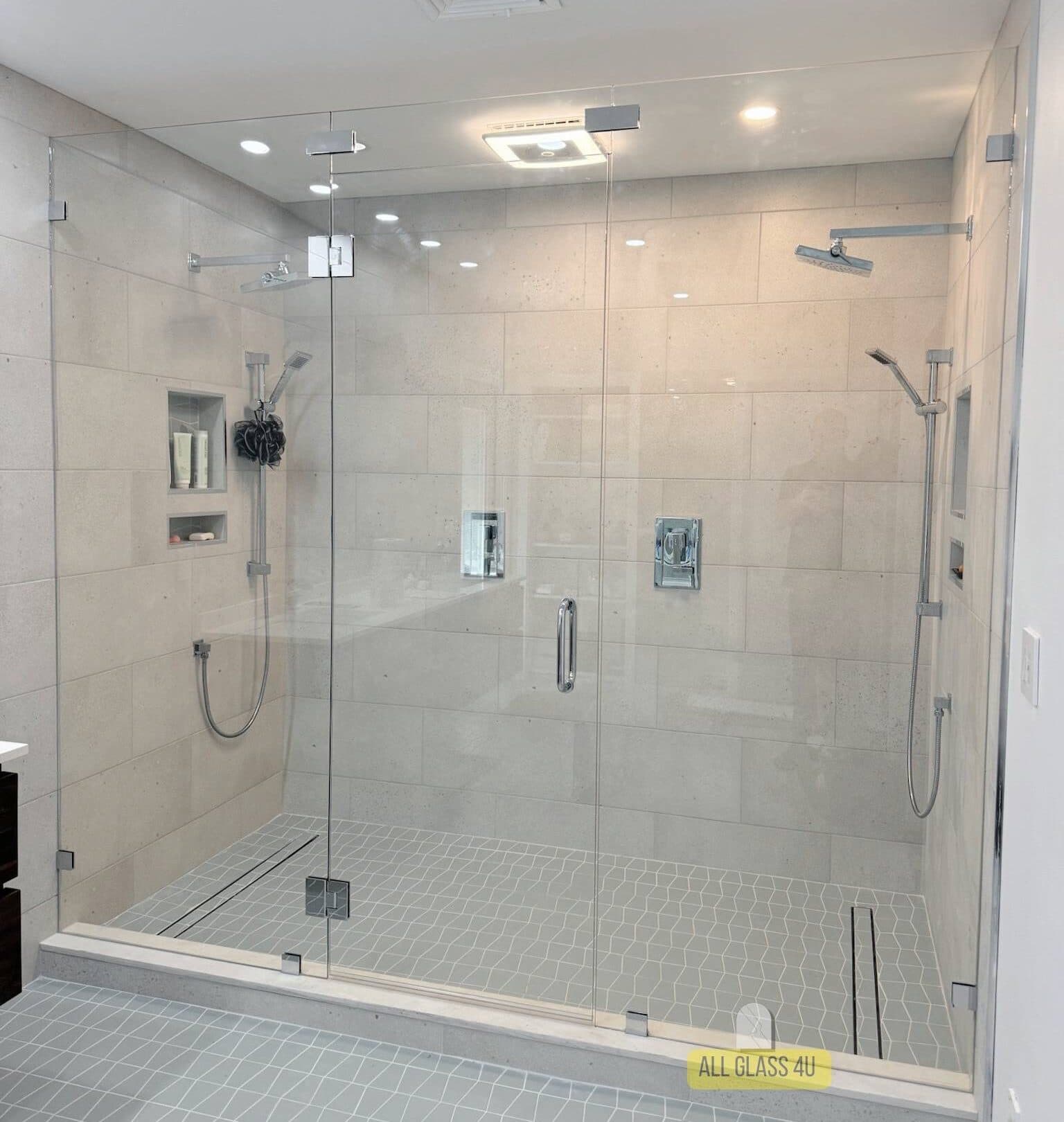
That's also a good time to move to frameless glass, which has no frame channels for buildup to hide in.