


Protective cover or full glass top?
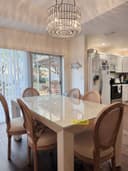
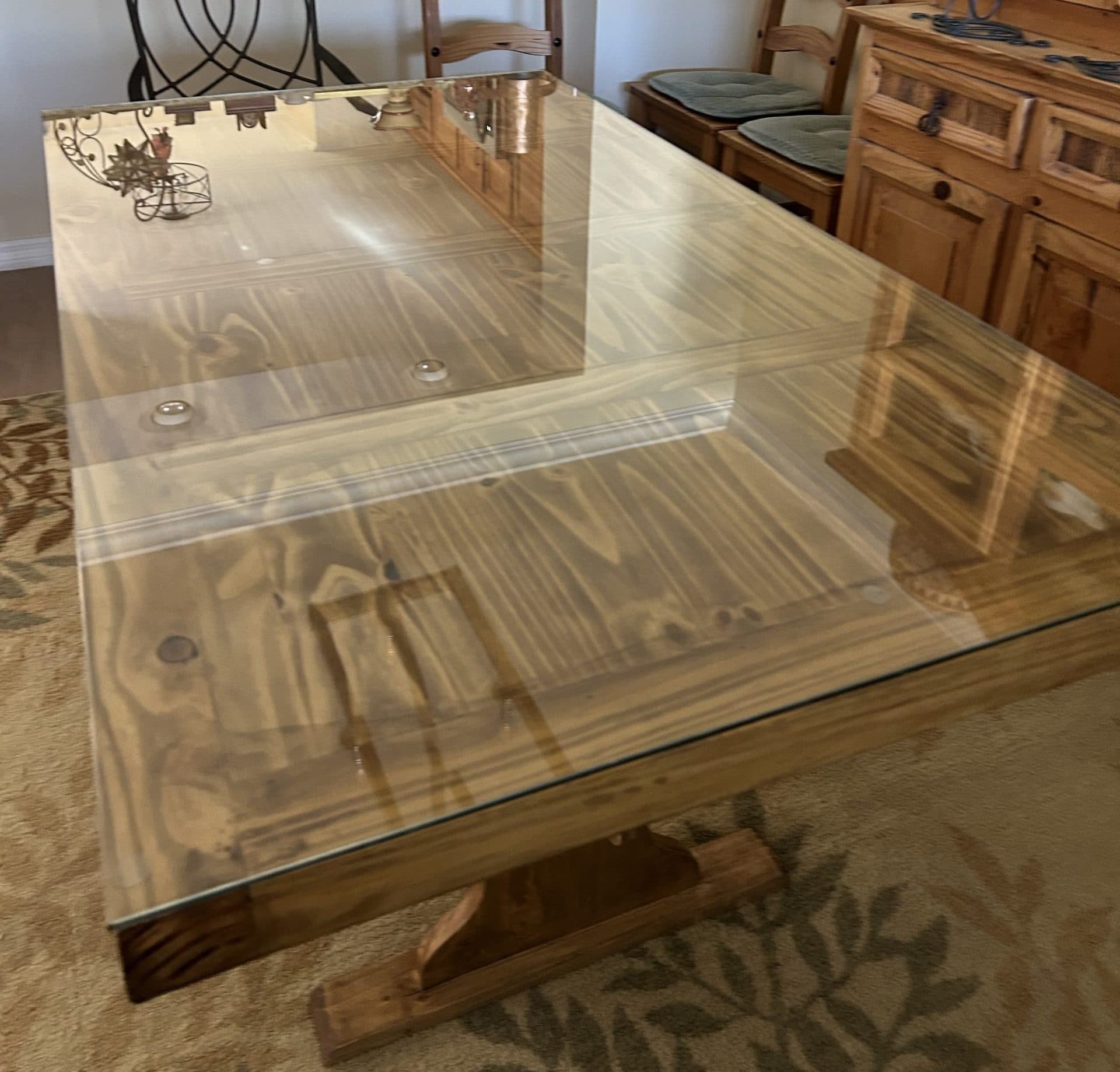
A protective cover sits on top of a wood, marble or antique surface. It guards against scratches, spills and heat, and the table still shows through. Small clear bumpers usually sit between the glass and the wood so it doesn't slide.
A full glass top is the table surface itself, resting on a base, pedestal or frame. Dining tables, patio tables, desks and conference tables all work this way. The difference matters because it drives the thickness you need.
How thick should the glass be?
Covers that rest on a solid surface are often the thinnest option, since the table carries the weight. 1/4" is common here.
Full tops that span open space on a base need thicker glass to feel solid and stay safe. 3/8" and 1/2" are the usual choices, with 1/2" giving the heaviest, most premium feel. Tell your glass company the base style and how far the glass will overhang, and they'll match the thickness to the build.
Edge styles, compared
The edge is what you see and touch every day.
- Polished: smooth, glossy and clean. The everyday standard.
- Beveled: an angled border that catches the light. Classic and formal.
- Seamed: lightly sanded to remove sharpness. Simple and practical, for covers or tops that sit inside a frame.
- Pencil: a rounded edge that feels soft to the hand, popular in busy homes.
Clear, low-iron or frosted
Standard clear glass carries a slight green tint, most visible at the edge and over light woods or white marble. Low-iron glass removes that tint, so the surface underneath shows its true color.
Frosted glass hides fingerprints and smudges and gives a soft, modern look on a full top. It's a poor fit for covers, though, since it hides the table you're trying to protect.
How to measure your table
Accurate numbers mean a top that fits the first time.
- Rectangle or square: length and width, edge to edge.
- Round: the diameter, across the widest point. Measure twice at right angles.
- Oval or irregular: trace a paper template of the top.
- Decide on overhang: flush with the table edge, or slightly inset.
- Note any leaves, curves or carved edges.
- Take a photo of the table from above.