


How to measure for glass shelves
Measure the width at the back wall, the middle and the front of the opening. Walls and cabinet sides are rarely perfectly square, and glass can't be trimmed once it's tempered. Note the smallest number and the depth you want.
Then note what the shelf sits on: clips, brackets, a channel or the sides of a niche. Write down the space each bracket takes up and any outlets, trim or tile edges in the way. If the space is a tiled niche or an odd angle, have the glass company measure on site instead of quoting from your numbers.
Thickness and tempered glass
Most custom shelves are 3/8" or 1/2" thick. Thicker glass looks heavier, feels more solid and handles longer spans and heavier loads.
Tempered safety glass is the standard for shelves people use every day. It's heat-treated for strength, and if it ever breaks it crumbles into small, blunt pieces instead of sharp shards. Because tempering happens after cutting, every hole and notch has to be planned before the glass is ordered.
Clear, low-iron, frosted or textured
Clear glass is the default and suits most kitchens, bars and display cases. Look at the edge and you'll see a slight green tint. Low-iron glass removes it, so the shelf reads colorless and what sits on it shows true.
Frosted glass softens the view and hides water spots and fingerprints better, which helps in bathrooms. Textured glass, like rain or reeded, adds pattern and suits a design-forward space more than a working pantry.
Edges and mounting
The edge and the hardware decide how finished the shelf looks.
- Polished edges: smooth and glossy, made to be seen from the side.
- Clips or small brackets: simple, low-profile and easy to adjust.
- Decorative brackets: a design element in brass, black or chrome.
- Channel or floating mounts: the cleanest look, but they need solid backing in the wall.
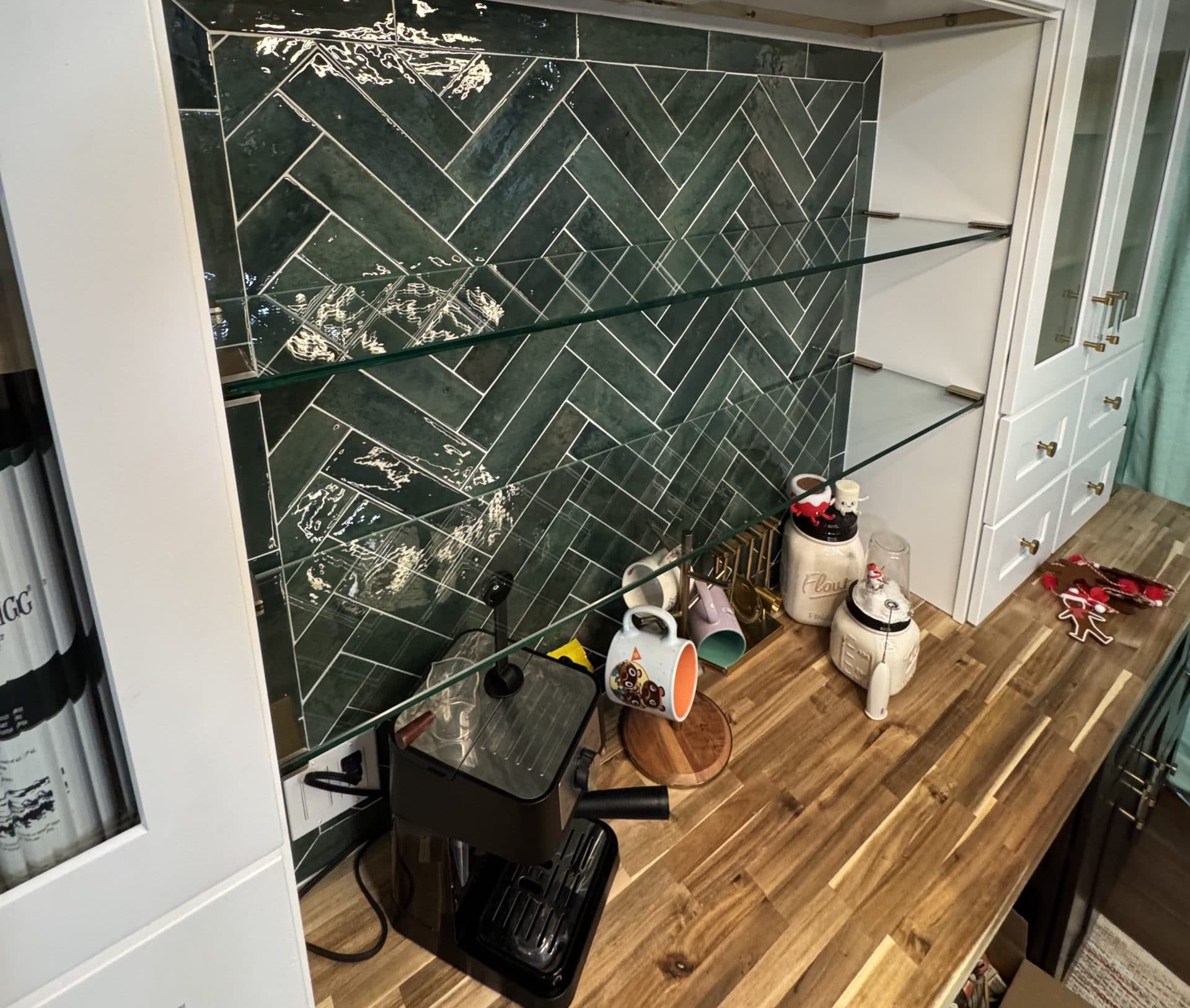
- Niche installs: the shelf rests on the side walls of a tiled niche or cabinet.
Your checklist before you order
Have these answers ready and a quote is fast and accurate.
- Width at the back, middle and front, plus the depth
- Number of shelves and the spacing between them
- Thickness: 3/8" or 1/2"
- Glass type: clear, low-iron, frosted or textured
- Edge finish and hardware style
- What will sit on each shelf: glassware, books, décor or toiletries
- A photo of the space